If you are deciding whether your event should stock two pint cups or standard pint cups, the short answer is that most events benefit from both, weighted toward the format your crowd buys most. Standard pint cups give the lowest cost per cup for everyday service, while two pint cups cut trips to the bar and speed up service at peak moments. This guide compares the two formats on cost, service speed, stackable logistics and compliance so you can set the right split.
See the full reusable plastic cups range, including reusable pint cups and stackable two pint formats.
Two Pint vs Pint: The Core Trade-Off
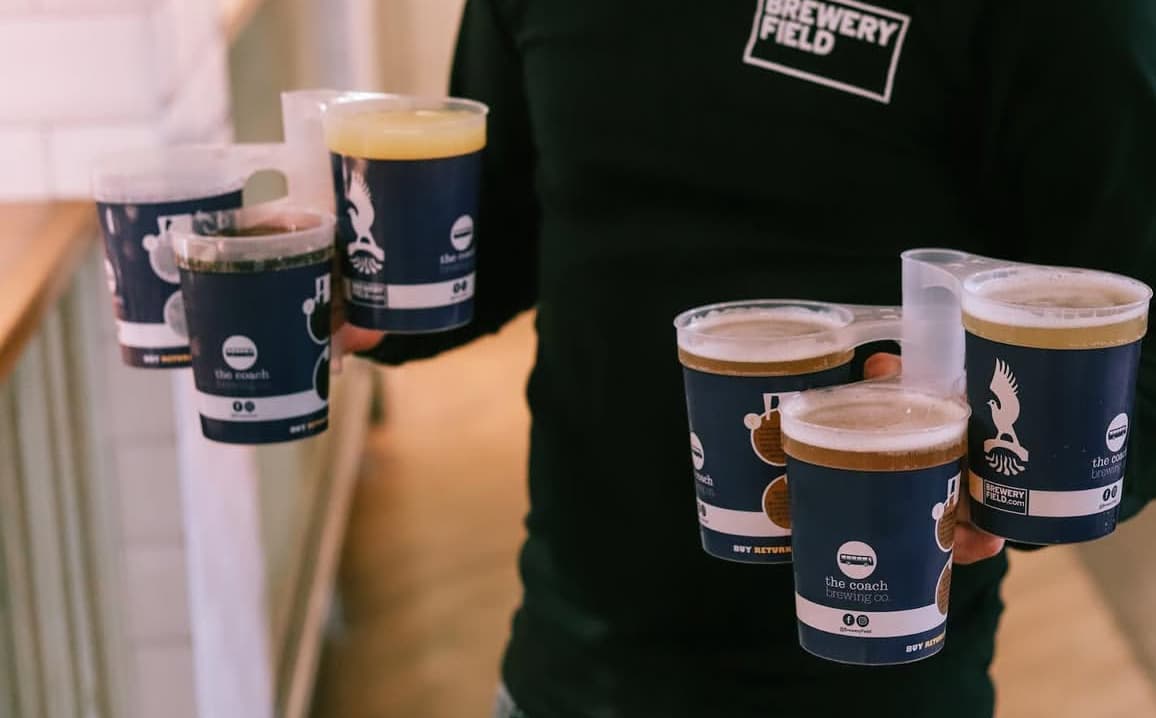
The choice comes down to transactions. A standard pint cup holds 568 ml and is the natural unit for casual, steady drinking. A two pint cup holds 1136 ml, so one serve covers a round for two and your bar processes fewer transactions to shift the same volume of drink. When queues build, fewer transactions is the single biggest lever you have on service speed.
When the pint cup wins
Pint cups suit venues with steady, spread-out demand: a beer garden on a warm afternoon, a general admission bar with no obvious rush, or any event where people drift up one at a time. The lower unit cost also makes pints the sensible default for the bulk of a large order.
When the two pint cup wins
Two pint cups earn their keep at surge moments. Stadium concourses at half-time, festival bars in the gap between acts and outdoor cinemas at the interval all see everyone hit the bar at once. Letting each customer buy two pints in one serve clears that surge far faster. Our guide on when bigger really is better digs into the throughput maths.
Two Pint vs Pint Cups Compared
| Factor | Two Pint Cup (1136 ml) | Pint Cup (568 ml) |
|---|---|---|
| Bar trips per round of four | 2 trips | 4 trips |
| Best for | Peak surges, stadiums, festivals | Steady general service |
| Unit cost | Higher per cup, lower per ml served | Lowest per cup |
| Stackable | Yes, patented Stack-Cup handle | Yes, same nesting profile |
| Compliance | UKCA marked line measures | UKCA marked line measures |
| Material | BPA-free polypropylene, dishwasher safe for hundreds of cycles | BPA-free polypropylene, dishwasher safe for hundreds of cycles |
| Minimum order | 50 cups, from £0.22 at volume | 50 cups, from £0.22 at volume |
Stackable Logistics Apply to Both
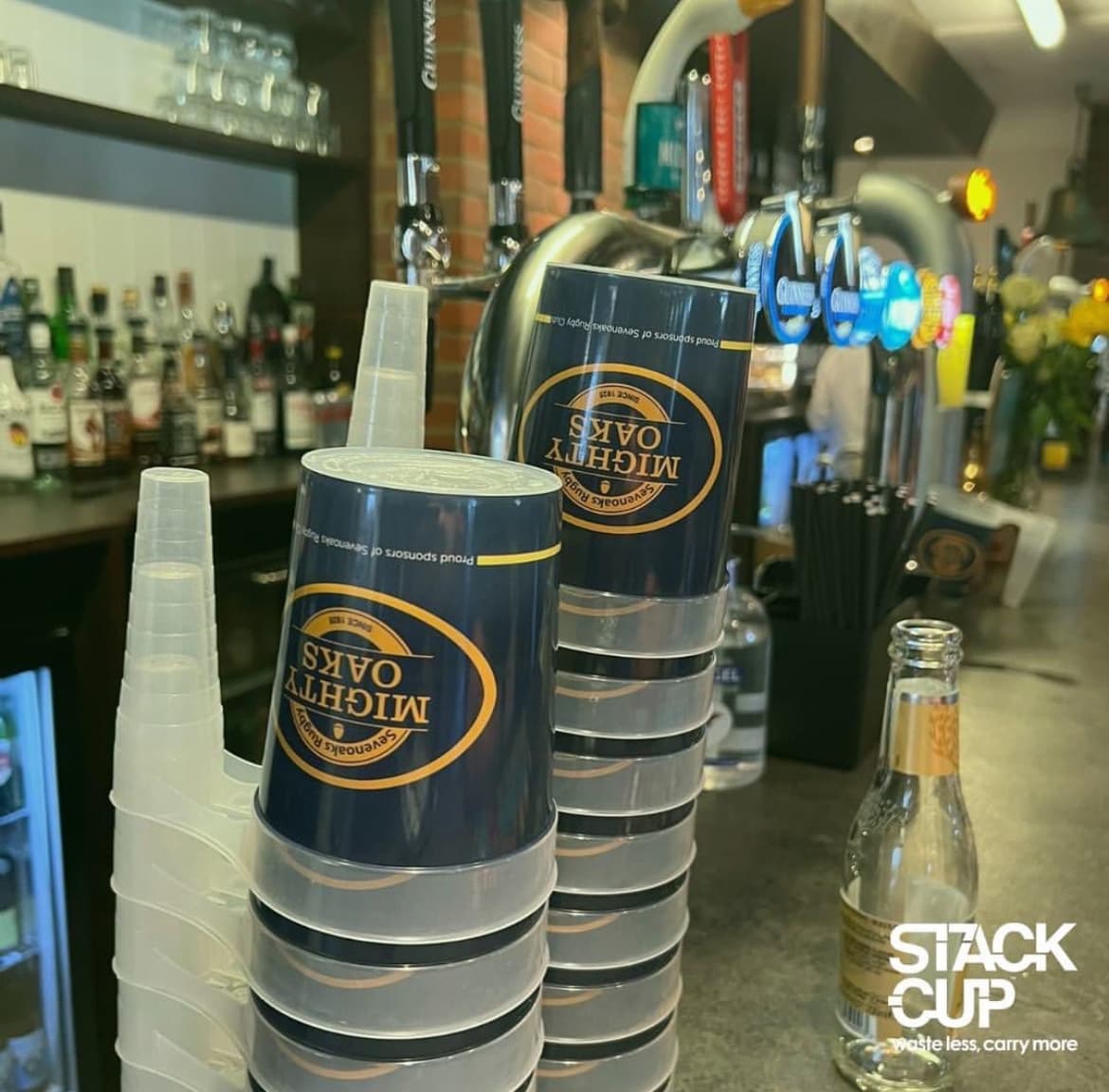
Whichever split you choose, the logistics stay simple because every Stack-Cup format nests. The patented spiral handle lets pints and two pint cups stack on the same shelf and travel on the same pallets, so storage stays tidy, counting is fast and your team can switch formats mid-service without rearranging the back bar. More units per pallet also means fewer van runs and less back-of-house space tied up on site.
Both formats are moulded from BPA-free polypropylene, are dishwasher safe across hundreds of cycles and are made in the United Kingdom, so durability and compliance are identical. You are only ever choosing on capacity and cost, not on quality.
Setting Your Stock Split
A common starting point is to make pints the bulk of the order and add two pint cups for the bars that face the worst surges. Watch your till data across the first event and adjust: if a concourse bar is drowning at half-time, shift more of its allocation to two pint cups next time. You can mix both formats on a single order from our full cup range, or talk to us about the right split for your venue.
Frequently Asked Questions
Should my event stock two pint cups or standard pint cups?
Most events stock both. Standard pint cups suit general service and give the lowest cost per cup, while two pint cups shine at peak moments such as half-time or the gap between acts, where fewer transactions keep the queue moving. Weighting the split toward the format your crowd buys most is usually the right call.
Do two pint cups cost more than pint cups?
The unit price of a two pint cup is higher because it uses more material, but the cost per millilitre served is lower and you buy fewer cups to serve the same drink volume. Both formats start at our 50 cup minimum and from around 33 pence per cup at volume.
Are both formats a legal measure?
Yes. Both our pint and two pint cups carry UKCA marked line measures, so every pour is a certified quantity. That keeps you compliant with Trading Standards whichever format a customer chooses.
Do pint and two pint cups stack together?
They do. Every Stack-Cup format shares the same patented spiral handle, so pints and two pint cups nest on the same shelf and travel on the same pallets. That keeps storage tidy and lets staff switch formats without reorganising the back bar.
What is the minimum order and lead time for a mixed order?
You can mix formats across a single order with a 50 cup minimum. Standard lead time is 10 working days from artwork approval, with express production as fast as 48 hours when you are up against an event date.